When is animal physiotherapy especially important?
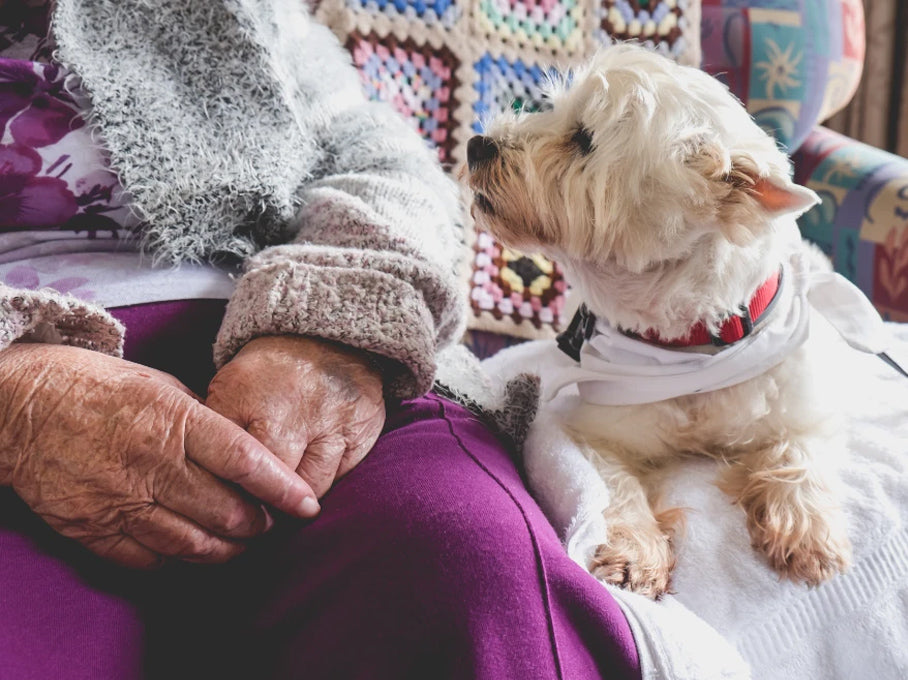
Senior pets and age-related changes
In senior age, the focus is quality of life: gently reducing pain, supporting circulation and mobility, reducing decline and stiffness, and lowering the risk of falls and injury.
Post-operative rehabilitation (orthopaedics/neurology)
After surgery, animal physiotherapy helps reduce pain and swelling, maintain muscle mass and gradually rebuild gait and strength, with less compensation and fewer secondary problems.
Muscle strain, sprain or overuse of tendons or ligaments
It helps ease local pain, supports tissue repair and progressively rebuilds strength, helping the animal return to a more natural movement pattern and reducing the likelihood of recurrence.
Chronic degenerative joint and spinal conditions
It helps reduce pain, preserve mobility and maintain muscular stability, and can help break the cycle of "pain -> less movement -> more decline and stiffness -> more pain" while slowing progression.
Neurological functional limitation or nerve damage
With neurological problems, the focus is often on activation and control. Animal physiotherapy supports rebuilding the functional connection between the nervous system and muscles and improves standing and gait stability.
Excess weight, high load from body weight, reduced activity
The key is safe, low-impact training progression: reducing joint load, improving endurance and muscular support, and enabling sustainable activity again.
Cats: degenerative joint changes
Cats often hide discomfort. Studies show that 61% of cats over six years of age have at least one degenerative joint change. Animal physiotherapy works in a low-stress way to ease discomfort, preserve mobility and muscle mass, and gradually guide cats back into everyday activity.
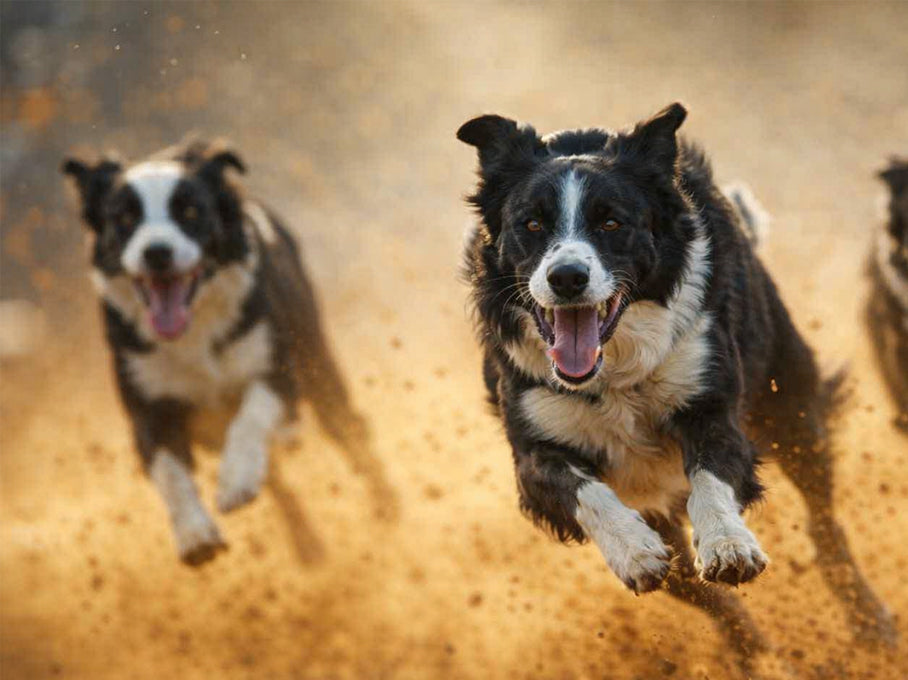
Sport/working dogs: recovery after heavy exertion or injury
The goal is not just "walking again", but returning safely to load-bearing activity. Phase-based training builds strength, coordination, explosiveness and endurance, and reduces recurrence and secondary injuries.

What treatment options are available?

Therapeutisches
Training
Therapeutisches Training
At its core is controlled, quantifiable mechanical loading that triggers adaptation in muscles, tendons, bones and the nervous system, helping restore function and load tolerance.
Common forms
Underwater treadmill, swimming, guided exercises, gait training and mobility exercises.
Which problem is addressed
When animals are less active because of pain or post-operative protection, muscle strength, joint stability and neuromuscular control decline quickly; compensation patterns and secondary injuries can follow. The goal of therapeutic exercise is to rebuild strength, endurance, coordination and range of motion step by step within a safe framework.
Physical
modalities
Physical modalities
At its core is the delivery of energy forms such as light, electrical current, sound/mechanical waves and temperature stimuli into the tissue. Once absorbed, they are translated into cellular signals and physiological responses, influencing pain, inflammation, circulation and recovery.
Common forms
Photobiomodulation (PBMT; e.g. red light/near-infrared), electrotherapy (TENS/NMES), heat/cold therapy, therapeutic ultrasound and shockwave therapy.
Which problem is addressed
When the aim is to influence pain and inflammation as gently and quickly as possible and to improve local circulation and the healing environment, physical modalities are often integrated into the treatment plan. The focus is on reducing pain sensitivity and modulating the inflammatory response so the animal feels noticeably more comfortable and is more likely to move again.
Manual
therapy
Manual therapy
At its core is hands-on treatment: specialists apply controlled pressure, traction and guided movement to the skin, muscles, fascia and joints. This influences the mechanical condition of soft tissues and joints, while neurophysiological reflex and pain-modulation mechanisms improve comfort and movement quality.
Common forms
Massage, Weichteiltechniken, Faszientechniken, Traktion, Gelenkmobilisation, passives Dehnen.
Which problem is addressed
Pain and inflammation are often accompanied by muscle tension, fascial adhesions and restrictions in periarticular structures. This leads to limited mobility and altered movement patterns. Manual therapy aims to improve these structural and mechanical factors and create a better foundation for subsequent training.

Common energy forms and mechanisms of action

PBMT is a non-invasive light therapy. After specific wavelengths are absorbed, especially by cellular components linked to mitochondrial processes, biological responses are triggered, such as improved cellular energy metabolism (more ATP), improved local microcirculation, modulation of inflammatory signals and oxidative stress, and down-regulation of pain signals and neuronal excitability.

PBMT is therefore often used for post-operative recovery, pain management in chronic osteoarthritis, soft-tissue injuries and long-term support for senior animals.

Low-level laser (LLLT)

- often used in professional rehabilitation settings
Usually applied in veterinary practices or physiotherapy by veterinarians or therapists. The bundled beam and precise parameter settings make dosing and treatment planning easier when the target area is clearly localised. Suitable when professional assessment is needed and a standardised approach in a shorter time is desired.

LED red/near-infrared

- more common for home use and long-term management
LED light is usually broader in area and easier to handle. It is suitable for regular use and long-term support, for example with degenerative joint changes or during the post-operative phase. It is important to follow the device instructions for duration and frequency, avoid arbitrary increases in intensity and combine use with training and activity management.
Elektrostimulation umfasst zwei Hauptziele:

TENS (transcutaneous electrical nerve stimulation)

Core effect: pain relief.
Principle: Stimulation through the skin influences sensory afferents and the processing of pain signals in the nervous system, thereby reducing pain perception.
Use: acute/chronic pain management, lowering the discomfort threshold before training.

TENS (transcutaneous electrical nerve stimulation)

Core effect: pain relief.
Principle: Stimulation through the skin influences sensory afferents and the processing of pain signals in the nervous system, thereby reducing pain perception.
Use: acute/chronic pain management, lowering the discomfort threshold before training.

Cold

Phase: more acute, or when inflammation/swelling is pronounced.
Principle: Lowering tissue temperature causes vasoconstriction and reduces metabolic rate and nerve conduction speed; this supports swelling and pain reduction.

Heat

Phase: more in the rehabilitation phase, or with stiffness/tension.
Principle: Heat promotes circulation, reduces muscle tension and improves soft-tissue extensibility. It is often used as preparation for stretching and training to make movement smoother.
Both are mechanical wave therapies: mechanical energy is introduced into the tissue to influence local circulation, pain and recovery. Because intensity, penetration depth and indications/contraindications vary considerably, application is typically based on professional assessment.

Therapeutic ultrasound

Principle: high-frequency mechanical vibrations create micromechanical effects and, depending on the parameters, also thermal effects.
Use: promotion of local circulation and tissue extensibility, support for stiffness/tension/reduced tissue mobility during rehabilitation phases; often used as a complement before or after manual therapy and training.

Shockwave (ESWT)

Principle: short impulses of high-energy mechanical load at the target tissue, triggering biological responses and pain modulation.
Use: more often used for selected chronic soft-tissue problems, such as tendon or insertion-site complaints, for stimulation and pain therapy; requires careful indication, parameter selection and contraindication review.
Application through magnetic fields; common forms include static magnetic materials or pulsed electromagnetic fields (PEMF).
Principle: Magnetic fields may modulate pain status and the recovery environment through effects on membrane potentials, ion channels and microcirculation. Because device types, parameters and evidence vary, this is usually used as a complementary measure rather than as the sole core therapy.
Use: as a complement in long-term management of chronic pain; suitability should be assessed based on the specific problem and professional recommendation.

How does animal physiotherapy work?

Veterinarian
Tierhalter:in
Tierphysiotherapeut:in
Veterinarian:
diagnosis and safety
The central task is to clearly assess the cause and risks. This includes:
01
Medical diagnosis: identifying the underlying cause, such as orthopaedic, neurological or pain-related factors, so that treatment does not address symptoms only..
02
Contraindication check: assessing which measures are not suitable in the current phase in order to avoid complications and secondary damage..
03
Overall treatment plan: defining the main strategy, such as pain/inflammation management, functional rebuilding or long-term management of chronic problems..
04
Medical clearance: clear phase-specific guidance on what is possible and at what intensity in order to prevent incorrect loading..
Pet owner:
decides continuity and stable progress
Treatment success depends greatly on consistent, regular and correct implementation:
01
Adapting the home environment: non-slip mats, ramps, raised bowls and, for cats if needed, a lower litter-box entrance to reduce slipping and unnecessary joint strain..
02
Everyday exercises and care: walks and an exercise programme according to plan, such as joint mobilisation/stretching, with controlled dosage for pace, duration and frequency..
03
Pain and comfort management: understanding and implementing pain measures so that training can take place within a tolerable range..
04
Aids and nutrition/supplements: selecting and using braces or assistive devices as well as nutrition-related support according to professional recommendation, as part of long-term management..
Animal physiotherapist: translating treatment into a practical programme
The core task is to translate medical goals into a practical, measurable and adjustable rehabilitation plan, so the home programme can be carried out correctly. This typically includes:
01
Practice-based treatment: a combination of manual therapy, therapeutic exercise and physical modalities to relieve pain, improve mobility, support healing and provide a basis for training..
02
Home plan: activity management and exercises at home, such as dosing walks, joint mobility and stretching, strength and balance exercises, plus recommendations for adapting the environment so progress can build continuously in everyday life..
03
Re-evaluation and adjustment: ongoing adjustment of intensity and combinations based on pain response, gait pattern and load tolerance - effective, but without overload..
.

Animal physiotherapy continues to develop, and in modern veterinary medicine it is increasingly understood as a regular part of care. Especially for animals with limited mobility, the goal is not only to ease discomfort in the short term, but to rebuild function: bearing weight more safely, walking more steadily and finding a better way back into everyday life.

In this context, OsteoVitalis is one option within the physical modalities and enables regular use at home as practical everyday support. At the same time, it is important that red light/near-infrared therapy is not viewed as a standalone solution. Its strength is seen above all as part of an overall concept, aligned with diagnosis and phase, combined with therapeutic exercise, manual measures where appropriate and suitable activity management. This allows causes and load patterns to be addressed more sustainably and progress to become more stable.

PBMT red light therapy for animals
Learn more about OsteoVitalis red light products based on PBMT (photobiomodulation therapy).